
ADAC Project Holds Multi-Actor Partnership Workshop for Genale Basin Adaptation and Innovation Zone
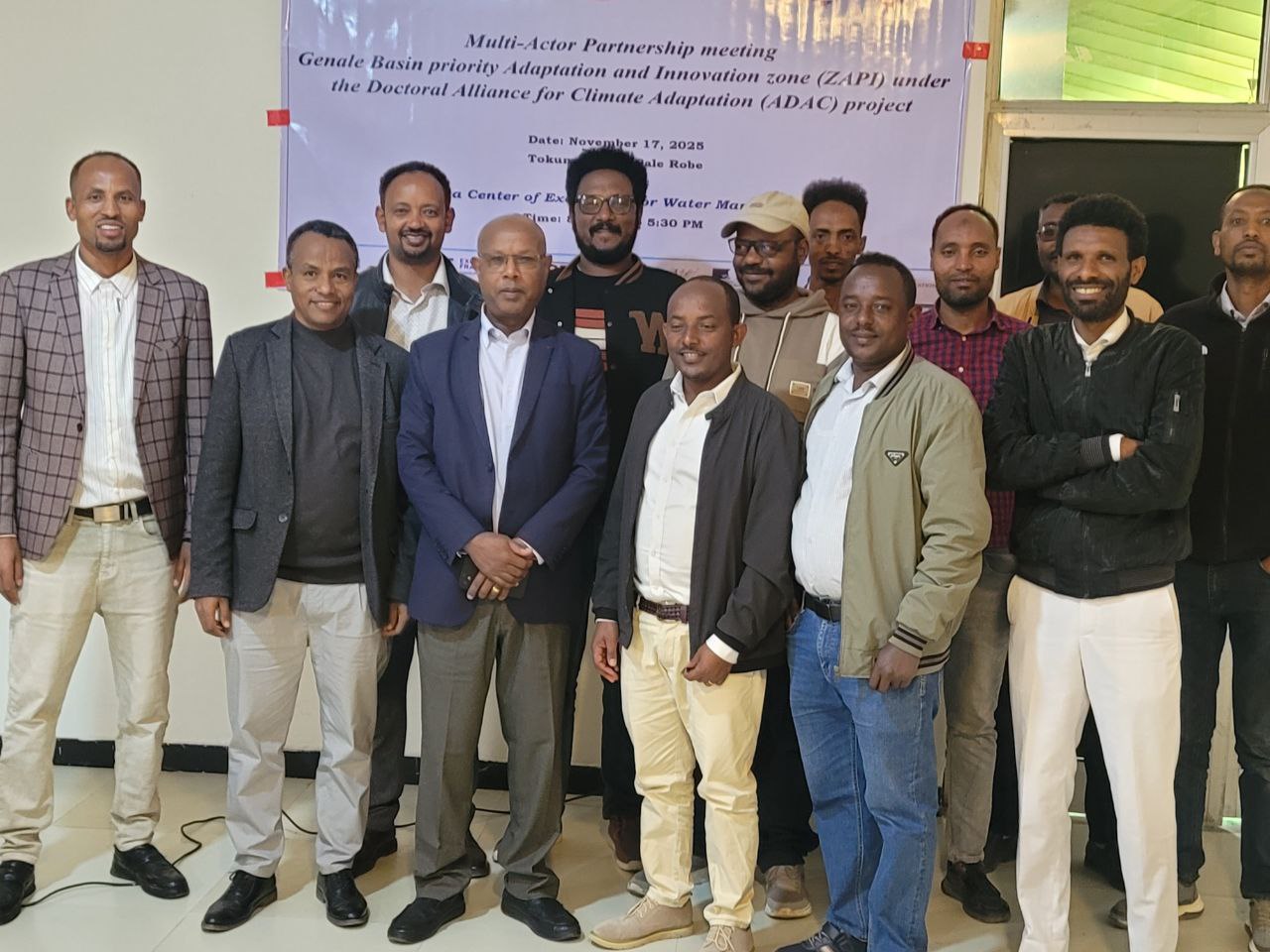
A significant step towards building climate resilience in one of Ethiopia’s most vital water sources was taken on November 17/2025, with the successful conclusion of the Genale Basin Multi-Actor Partnership Workshop. Held at the Tokuma Hotel in Bale Robe, the event brought together over 20 key stakeholders from government, academia, conservation, and local communities to officially launch the Genale Basin Priority Adaptation and Innovation Zone (ZAPI).
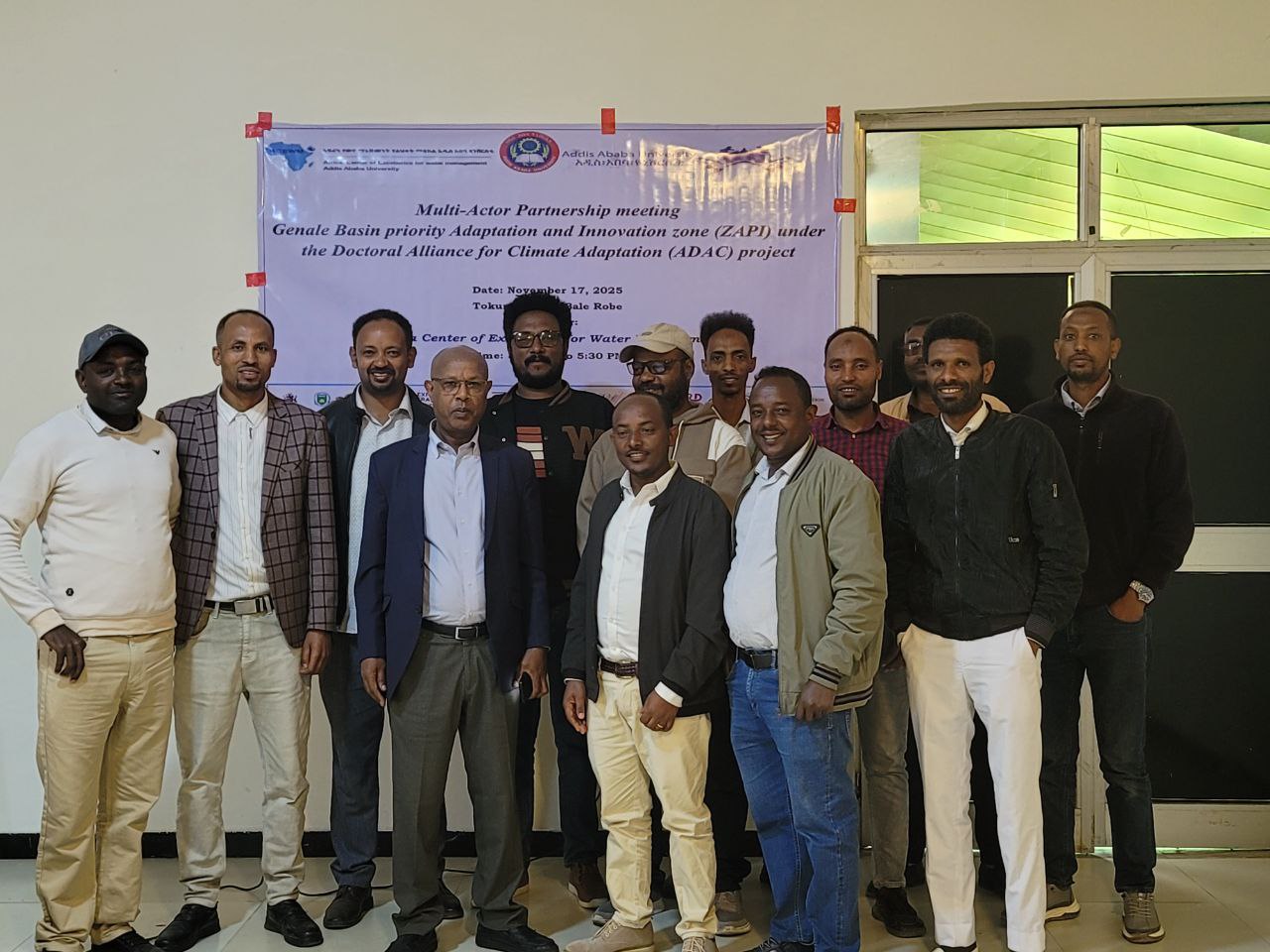
The workshop, organized by the Africa Centre of Excellence for Water Management (ACEWM) under the flagship Doctoral Alliance for Climate Adaptation (ADAC) project, marked a pivotal shift from dialogue to coordinated action. The ADAC project, funded by the Fonds Équipe France, aims to rehabilitate vulnerable socio-ecosystems in East Africa through science-driven, collaborative approaches.
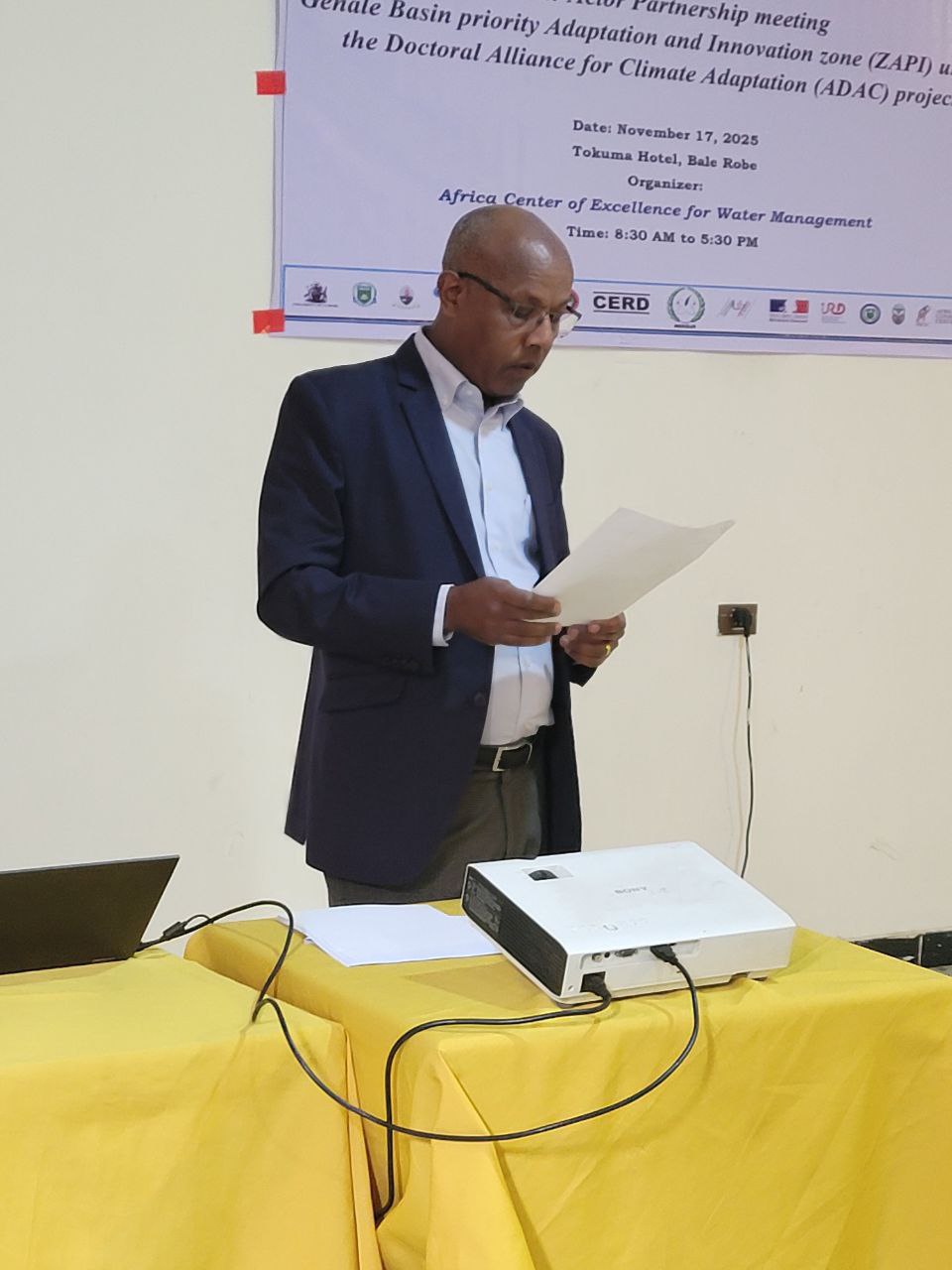
In his welcoming remarks, Prof. Feleke Zewge emphasized the urgency of the initiative, stating, “The Genale Basin, which springs from the globally significant Bale Mountain Eco-Region, is under severe threat. The basin is a real-world laboratory for climate action and resilience as it encompasses both highland and lowland riparian zones with diverse socio-economic and ecological conditions. This workshop is not just a meeting; it is the foundation for a united front against the impacts of climate change on our water resources and ecosystems.”
In his opening remarks, Ato Aliyi Mohamed, Head of Zonal Agriculture and Natural Resources Office, highlighted the importance of the Genale-Dawa Basin in Ethiopia, as the third largest basin in terms of land area after the Wabi-Shebele and Abay (Blue Nile) basins. The basin primarily originates from the Bale Mountains, a global biodiversity hotspot and vital water source for more than 30 million people in Southeastern Ethiopia, Somalia, and Northeastern Kenya. He also emphasized the presence of various initiatives, including those related to agronomy and agriculture, aimed at improving food security and natural resources conservation. Multiple partners from government and non-governmental organizations work in the Bale zone. He acknowledged the ACEWM for initiating multi-stakeholder collaboration in the Genale Basin that can bring together stakeholders on a mutual agenda, and stated that their office is glad to collaborate on the project for sustained impact.
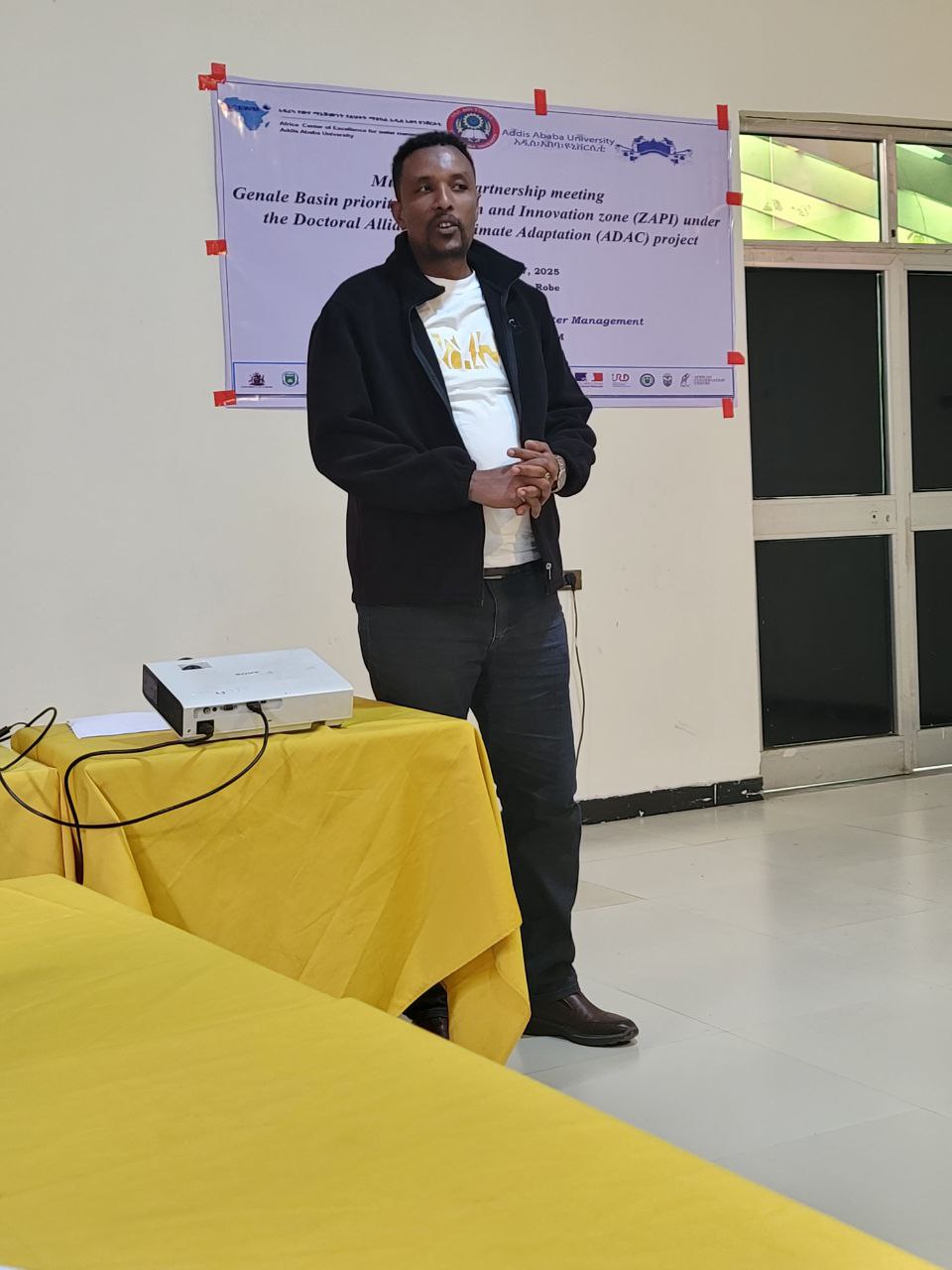
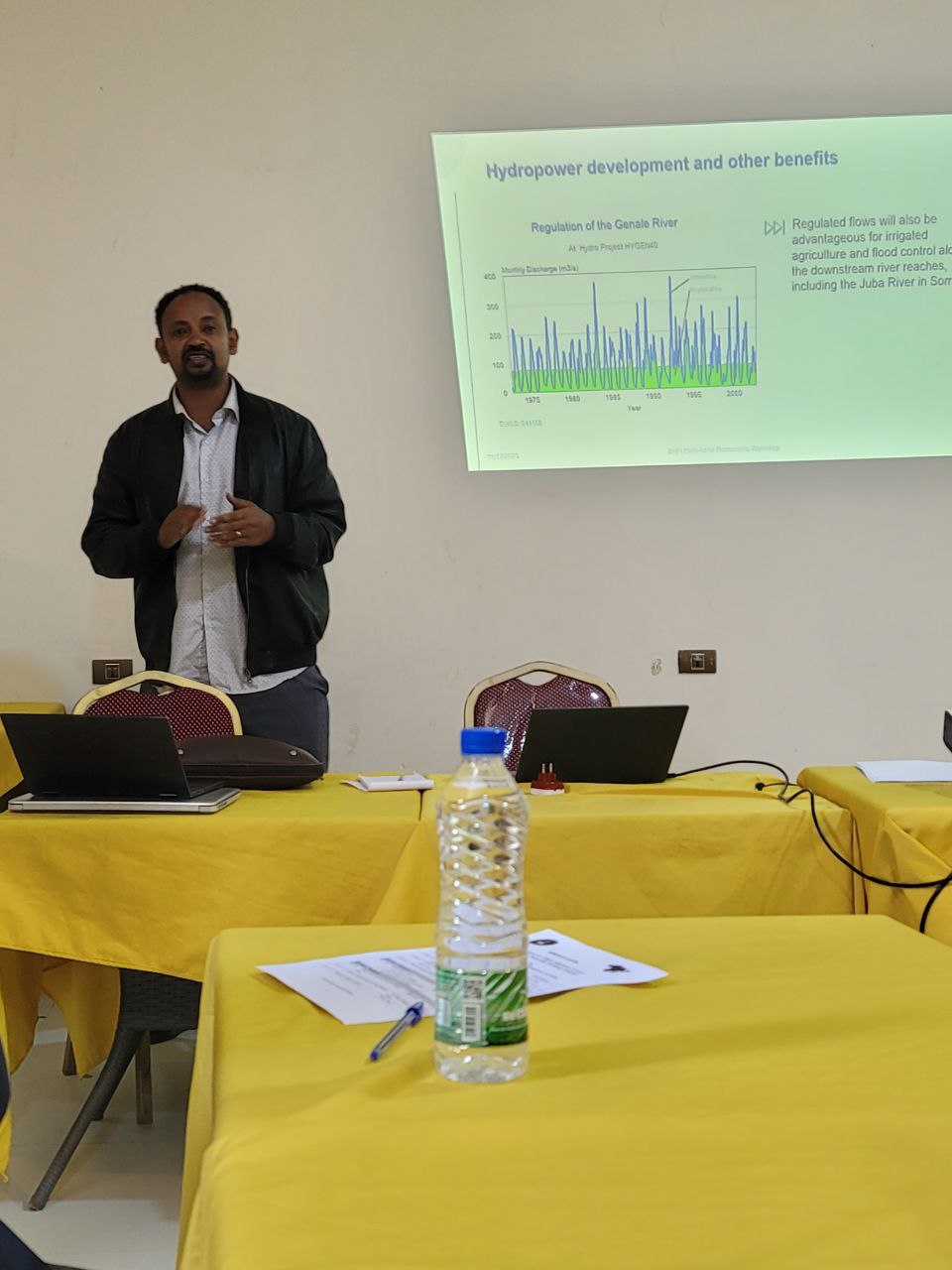
The day-long, intensive workshop successfully met its primary goal of building a shared understanding among participants and strengthening collaborative partnerships. Dr. Dessie Nedaw delivered an overview of the ADAC project and the planned ADAC Solidarity School, highlighting the consortium’s involvement of institutions from Djibouti, Somalia, Kenya, and Tanzania. He emphasized that the project’s overarching aim is to rehabilitate threatened socio-ecosystems across the region.
In addition, presentations by Dr. Dessie Nedaw on the ADAC project and Dr. Alemayehu Abate on the ecological importance of the Genale Basin provided a strong foundation for informed dialogue and joint action throughout the workshop.
A key outcome was the formation of a functional, multi-stakeholder network dedicated to integrated climate adaptation planning. Through parallel working group sessions, participants collaboratively identified existing local adaptation practices, critical knowledge gaps, and pathways for stronger coordination.
The workshop also served a dual purpose as a critical needs assessment for the ADAC project’s Capacity Building & Solidarity School. The discussions yielded a prioritized list of capacity gaps and local case studies, which will directly shape a demand-driven training curriculum for stakeholders in the basin.
Key tangible outcomes from the workshop include:
- A Strengthened Collaborative Network: A formalized network of stakeholders from Bale Zone offices, Madda Walabu University, Bale Mountains National Park, and NGOs like ECO-SAVE and FSD projects, with clear communication channels.
- Strategic Roadmap: A set of clear, actionable recommendations and agreed-upon next steps for the initial phase of the Genale ZAPI.
- A Baseline Knowledge Product: Data and insights collected will be compiled into a report to serve as a foundational input for the ADAC open science database.
- Curriculum for Future Training: Direct input for the ADAC Solidarity School, ensuring future training is grounded in the local realities and needs of the Genale Basin.
With the successful launch of the Genale ZAPI, stakeholders have laid a robust foundation for transforming the basin into a living laboratory for climate adaptation, ensuring that the millions who depend on its waters can build a more resilient and sustainable future.
About ADAC: The Doctoral Alliance for Climate Adaptation (ADAC) is a regional cooperation project uniting leading East African research and higher education institutions. Its mission is to empower a new generation of scientists and practitioners to develop sustainable, locally-relevant solutions for climate-vulnerable socio-ecosystems.
For more information, contact:
Dr. Dessie Nedaw | Africa Centre of Excellence for Water Management (ACEWM) | +251-91-139-0863