
Africa Water Security Conference Opens in Addis Ababa, Bringing Together Experts to Advance a Water-Secure and Resilient Africa
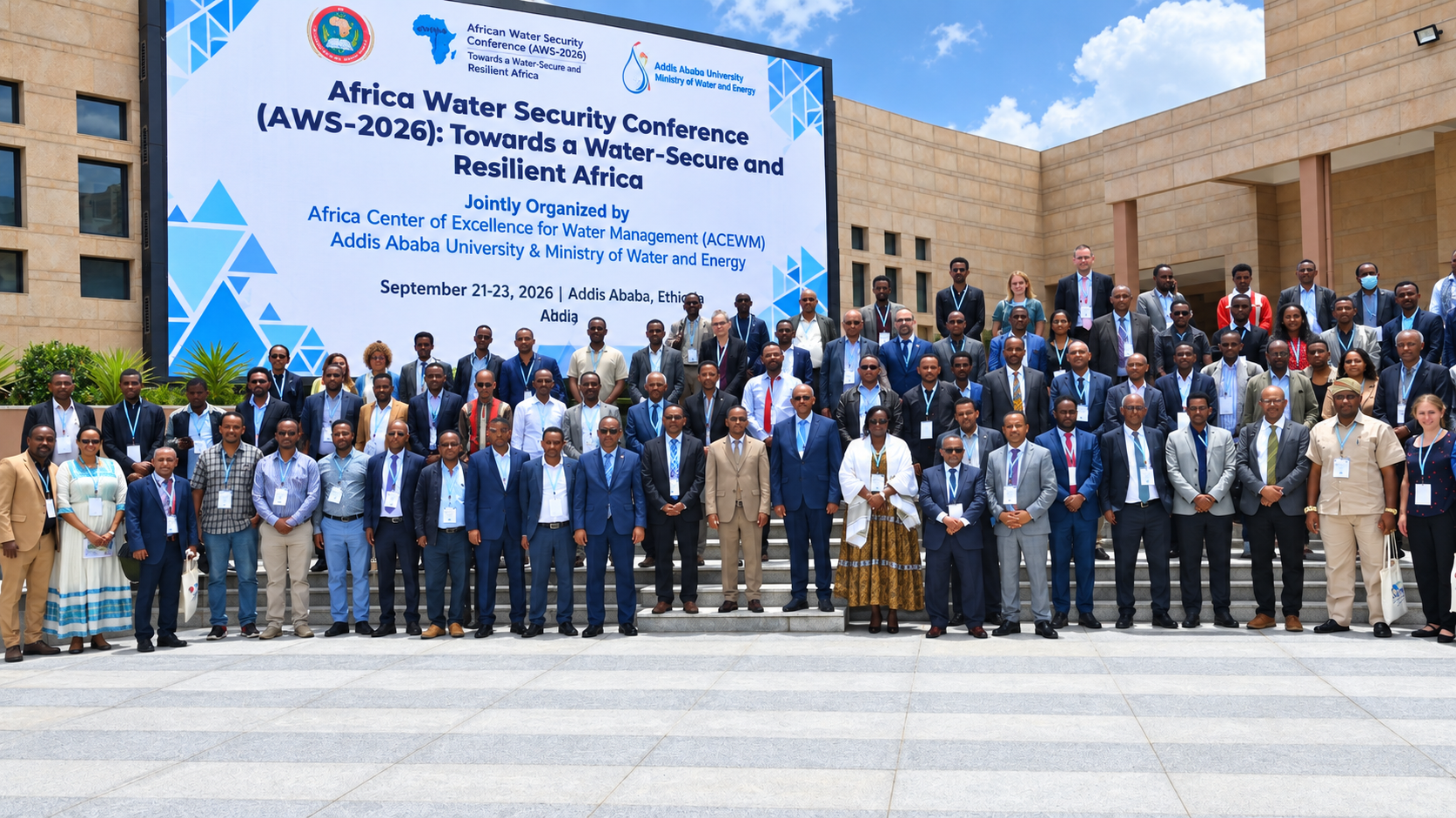
Addis Ababa, September 21, 2026 — The Africa Water Security Conference (AWS-2026), themed “Towards a Water-Secure and Resilient Africa,” opened in Addis Ababa, bringing together water experts, researchers, academics, policymakers and other stakeholders to deliberate on some of Africa’s most pressing water security challenges.
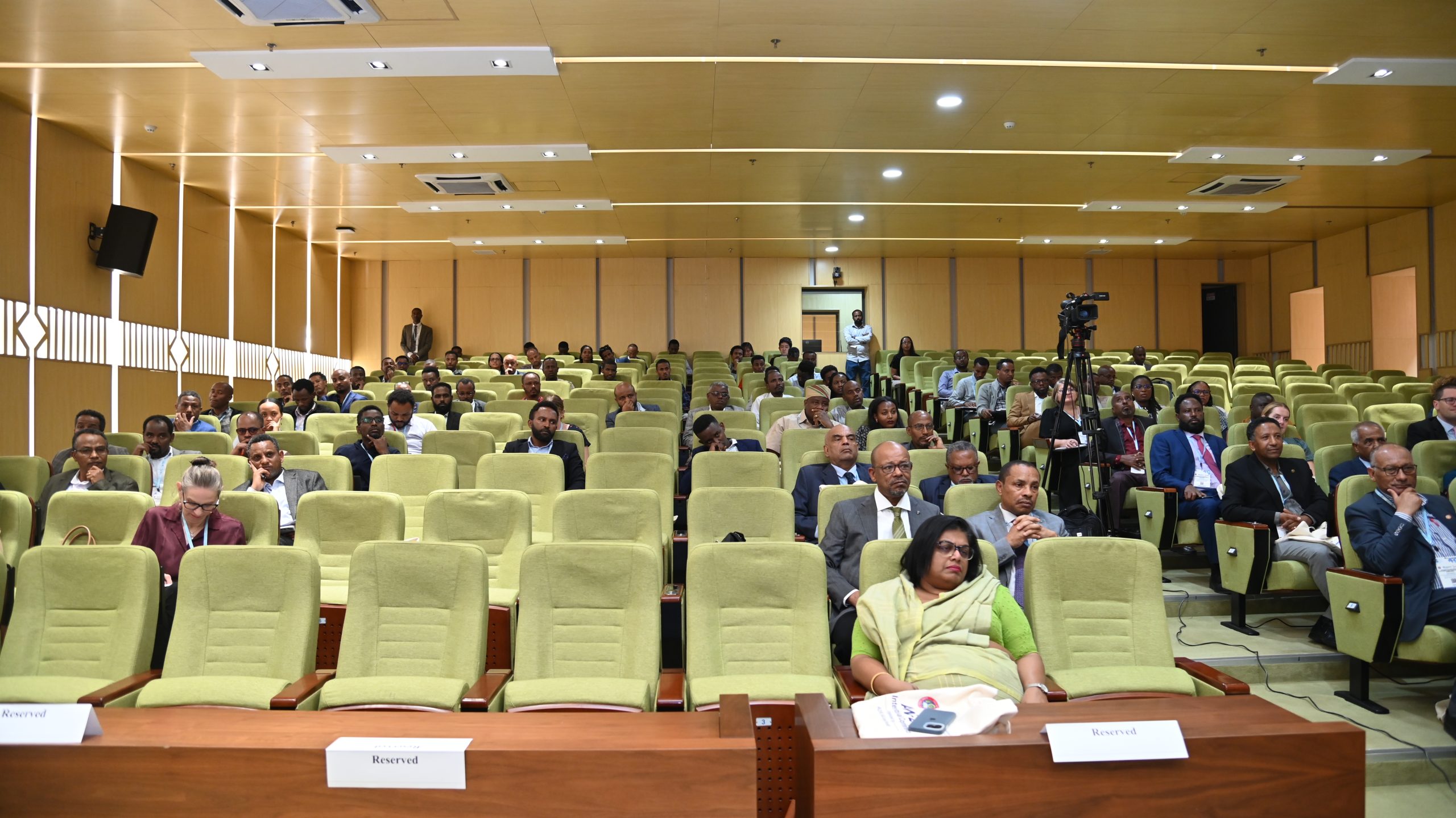
The three-day international conference, jointly organized by the Africa Center of Excellence for Water Management (ACEWM) of Addis Ababa University and the Ministry of Water and Energy, is being held from September 21–23, 2026, at the Adwa Victory Memorial Museum Hall in Addis Ababa.
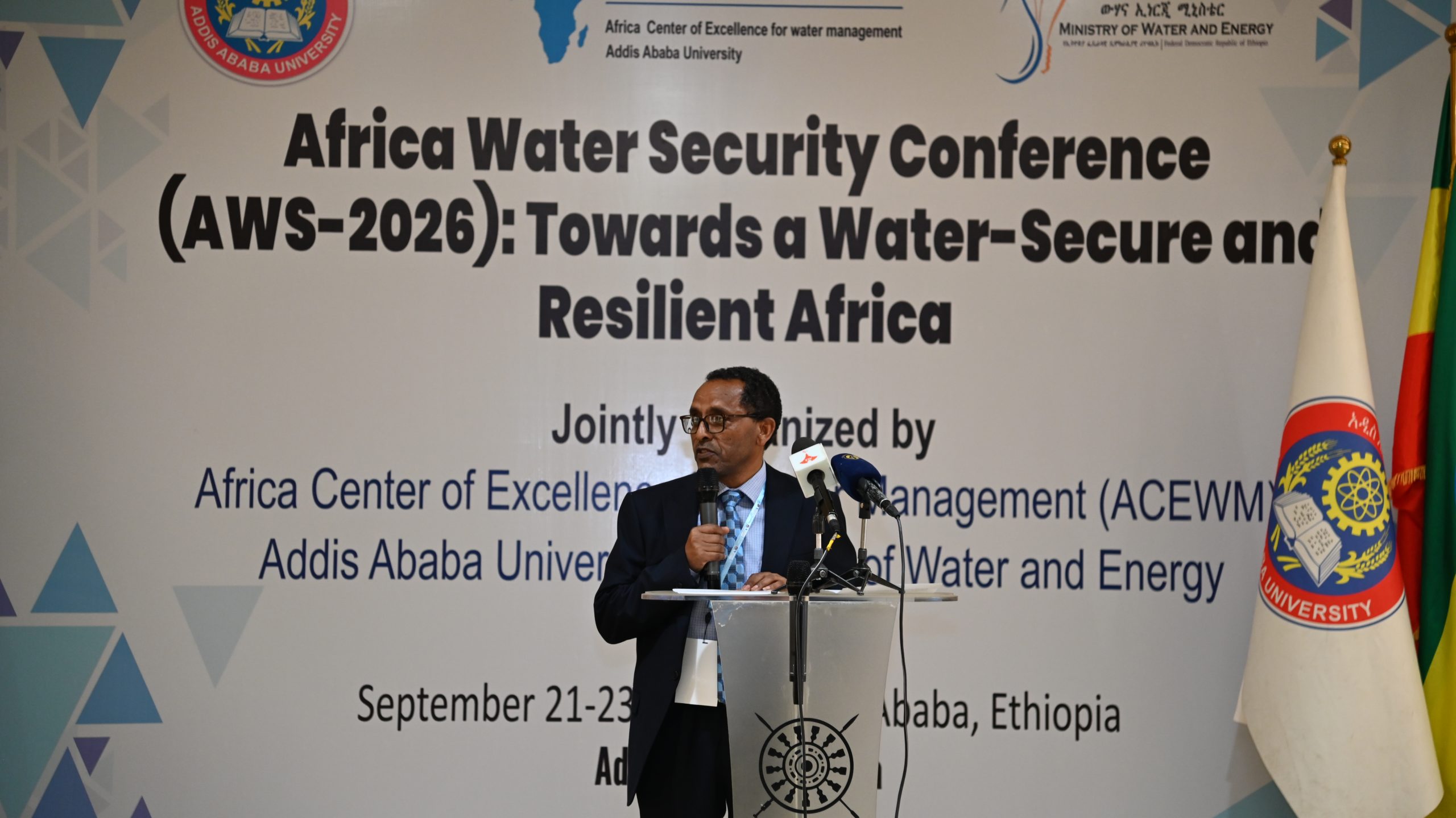
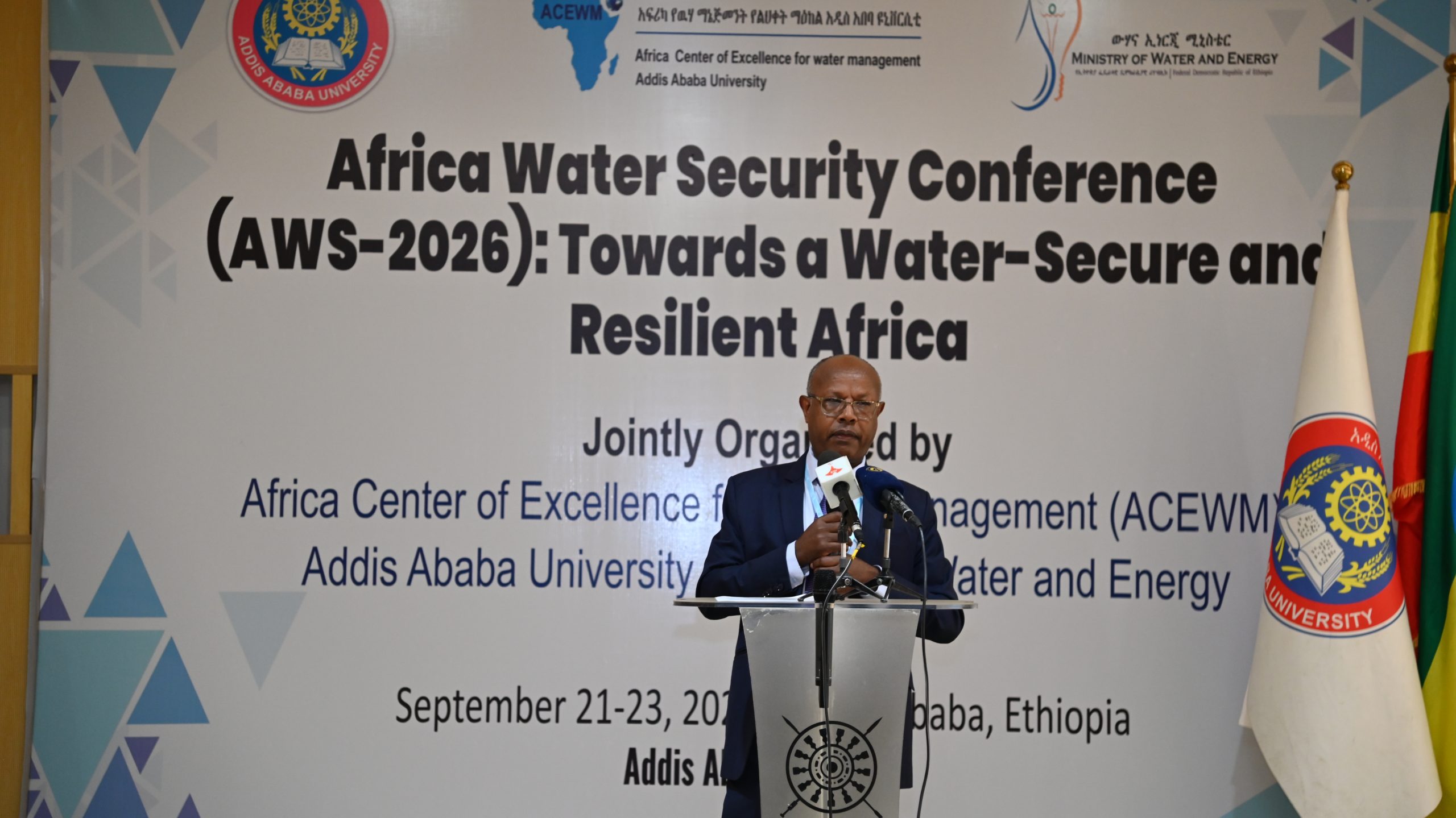
The opening program began with participant registration, followed by an introduction to the conference objectives by Prof. Feleke Zewge, Director of the Africa Center of Excellence for Water Management. Dr. Bikila Warkneh, Executive Dean of the College of Natural and Computational Sciences, also introduced the College and extended an invitation to participants. The opening session continued with a welcoming speech by professor Worash getaneh representing Dr. Samuel Kifle, President of Addis Ababa University, followed by the official opening remarks by Debebe Deferso a delegate from FDRE Ministry of Water and Energy.
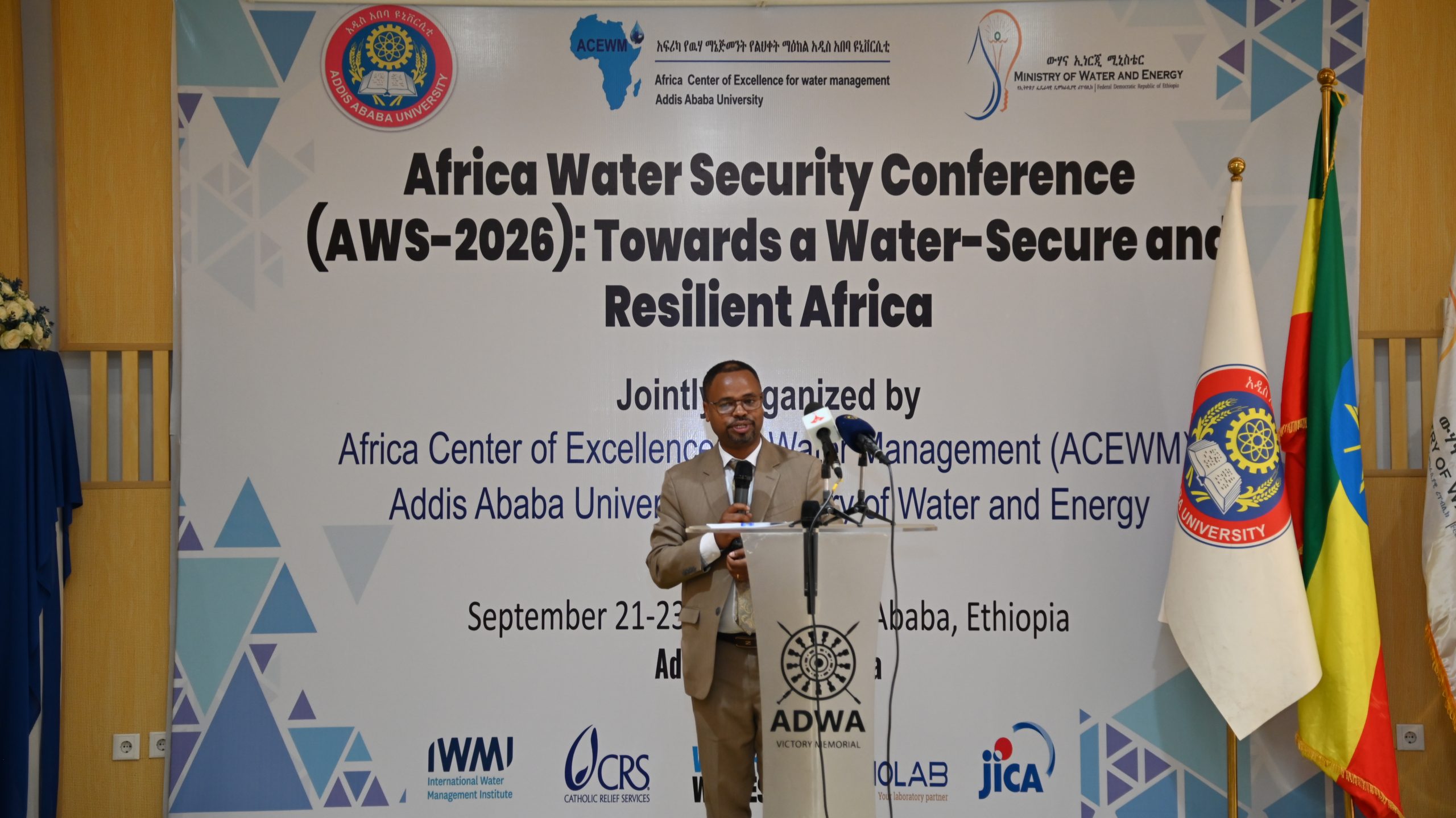
A major highlight of the opening day was the keynote address delivered by Prof. Assefa Melesse, Distinguished Professor and Director of the Graduate Program in Water Science at Florida International University, USA.
His keynote, titled “From Data to Decision: Integrating Hydrological Science, Climate Intelligence, and Transboundary Governance for Water Security in Africa,” focused on the importance of connecting hydrological knowledge, climate information and governance approaches in addressing water-security challenges across the continent.
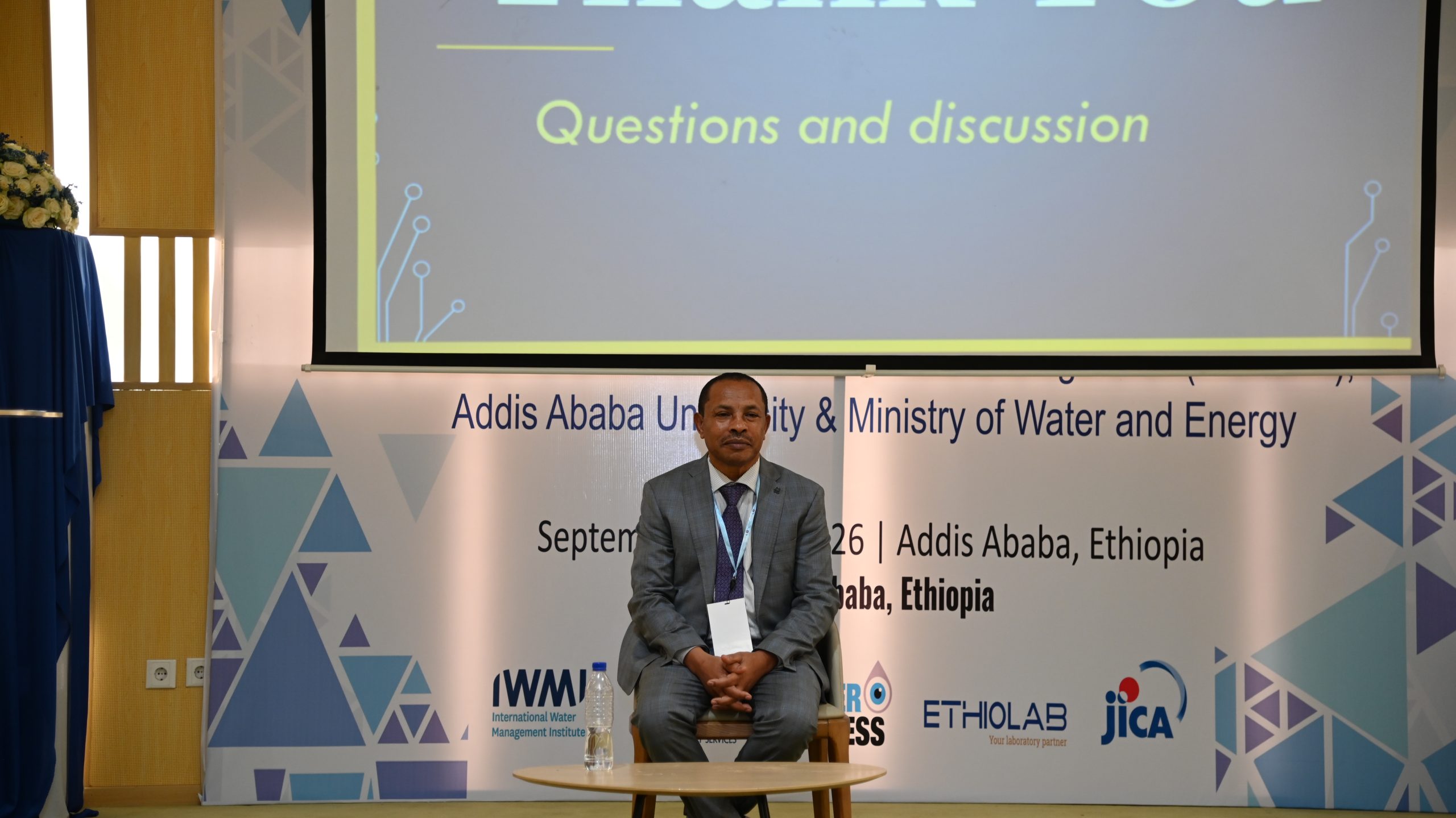
The morning program also featured a high-level panel discussion on “Equitable and sustainable use of water for development,” providing a platform for discussion around the relationship between water resources, development and equitable access.
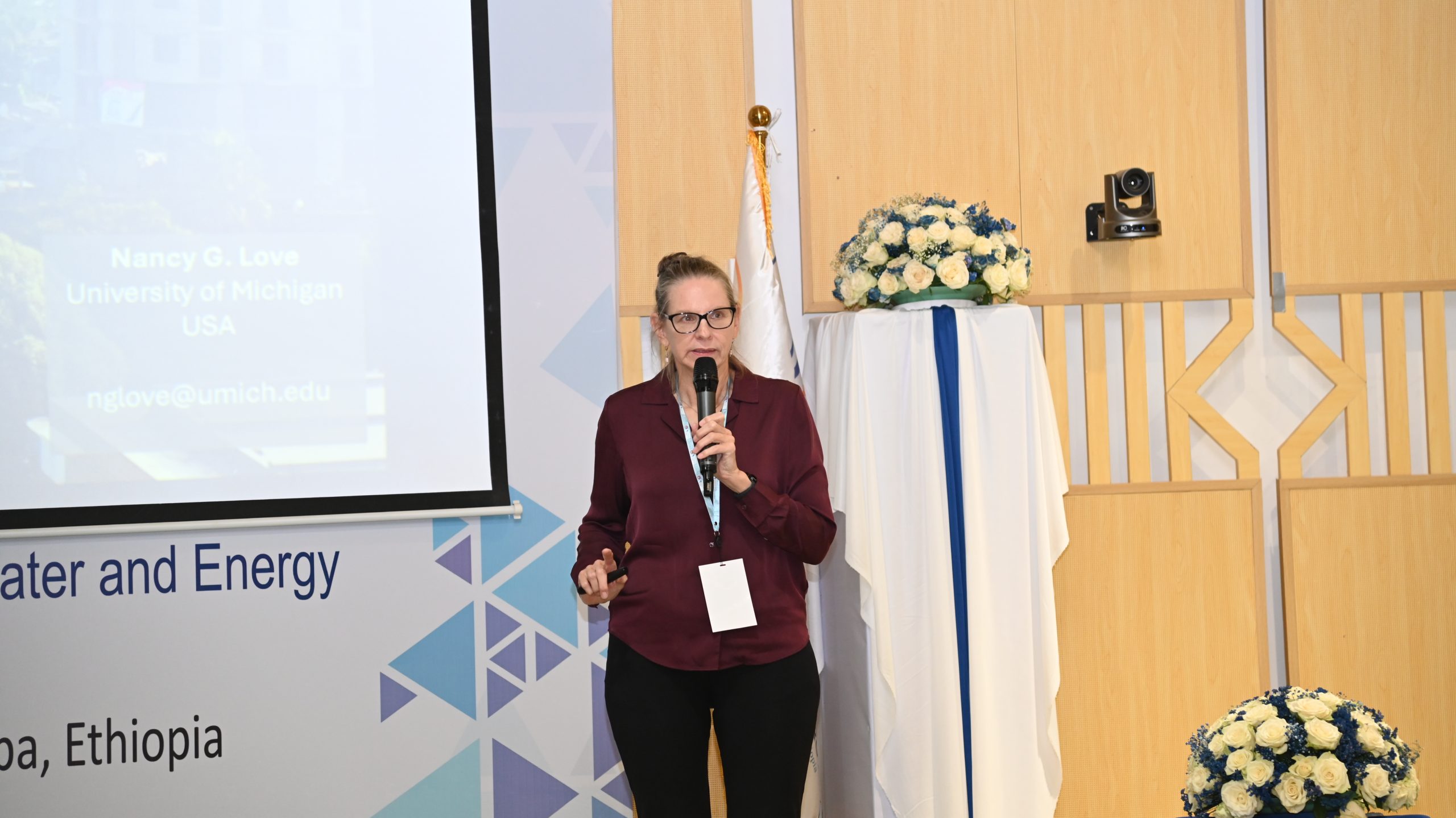
In the afternoon, Prof. Nancy Love, JoAnn Silverstein Distinguished University Professor in the Department of Civil and Environmental Engineering at the University of Michigan, USA, delivered a plenary lecture entitled “Toward Resilience: Distributed Water Innovations in Rapidly Growing Urban Areas.” The session highlighted the role of water innovations in building resilience in rapidly expanding urban environments.
The day concluded with parallel technical sessions covering three major thematic areas: Drinking Water and Water Security; Ecosystems and Water Security; and Transboundary Water Resources and Water Security.
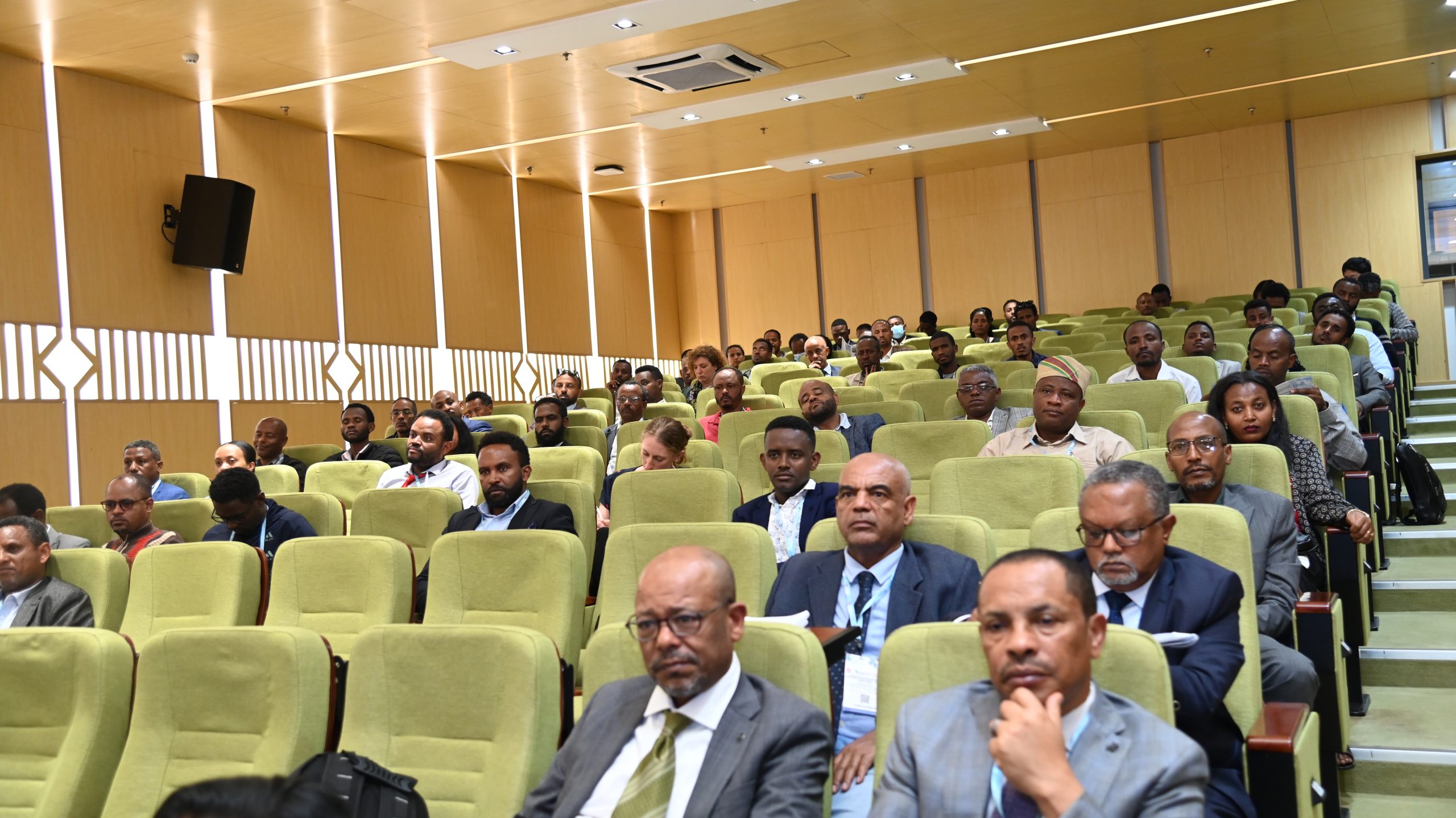
Presentations addressed a wide range of issues, including water, sanitation and hygiene; waterborne and water-related health risks; water-quality monitoring; flood risks under climate change; ecosystem resilience; groundwater and surface-water management; and transboundary water governance.
The conference will continue tomorrow, September 22, with a morning plenary lecture by Prof. Michael Templeton of Imperial College London, focusing on “The critical importance of access to safe water in schistosomiasis-endemic regions of Africa.” The morning will then proceed with parallel sessions addressing drinking water and water security, ecosystems and water security, and transboundary water resources.
The second day will also feature presentations on groundwater management, nature-based solutions, water-quality issues and climate change. In the transboundary water sessions, researchers will discuss subjects including hydropower and hydro-diplomacy, the Nile Basin, the Grand Ethiopian Renaissance Dam (GERD), regional peace building and climate adaptation.
In the afternoon, Prof. Elfatih Eltahir of the Massachusetts Institute of Technology (MIT) is scheduled to deliver a plenary lecture titled “A Path Forward for Sharing the Nile Water: Sustainable, Smart, Equitable, and Incremental.” Further parallel sessions will continue in the afternoon across the three conference themes.
The conference will conclude on September 23 with a morning plenary lecture by Dr. Ted Lawrence, Executive Director of the African Center for Aquatic Research and Education and Senior Policy Advisor at the International Institute for Sustainable Development. His lecture is titled “Food, water, and regional security on Africa’s Great Lakes: Threats, impacts, and solutions.”
The final day will continue with parallel sessions focusing on drinking water and water security as well as ecosystems and water security. Topics will include wastewater treatment, WASH-related health impacts, advanced water-quality monitoring, microplastic pollution, nature-based solutions, irrigation efficiency, climate adaptation and sustainable agricultural water management.
The afternoon program will feature additional technical presentations, followed by a moment of silence and tribute in memory of Prof. Tenalem Ayenew. The conference will officially conclude with a closing ceremony led by Prof. Worash Getaneh, Research and Innovation Vice President of Addis Ababa University.
With its combination of high-level plenary lectures, panel discussions and scientific presentations, AWS-2026 provides a platform for researchers and practitioners to exchange knowledge on water security, climate resilience, ecosystems, public health and transboundary water resources.
As the conference enters its second day, discussions are expected to continue connecting scientific evidence with practical approaches to water management and regional cooperation. The three-day program brings together diverse perspectives and research from Ethiopia and other African countries, alongside contributions from international experts, with the broader focus of advancing a water-secure and resilient Africa.